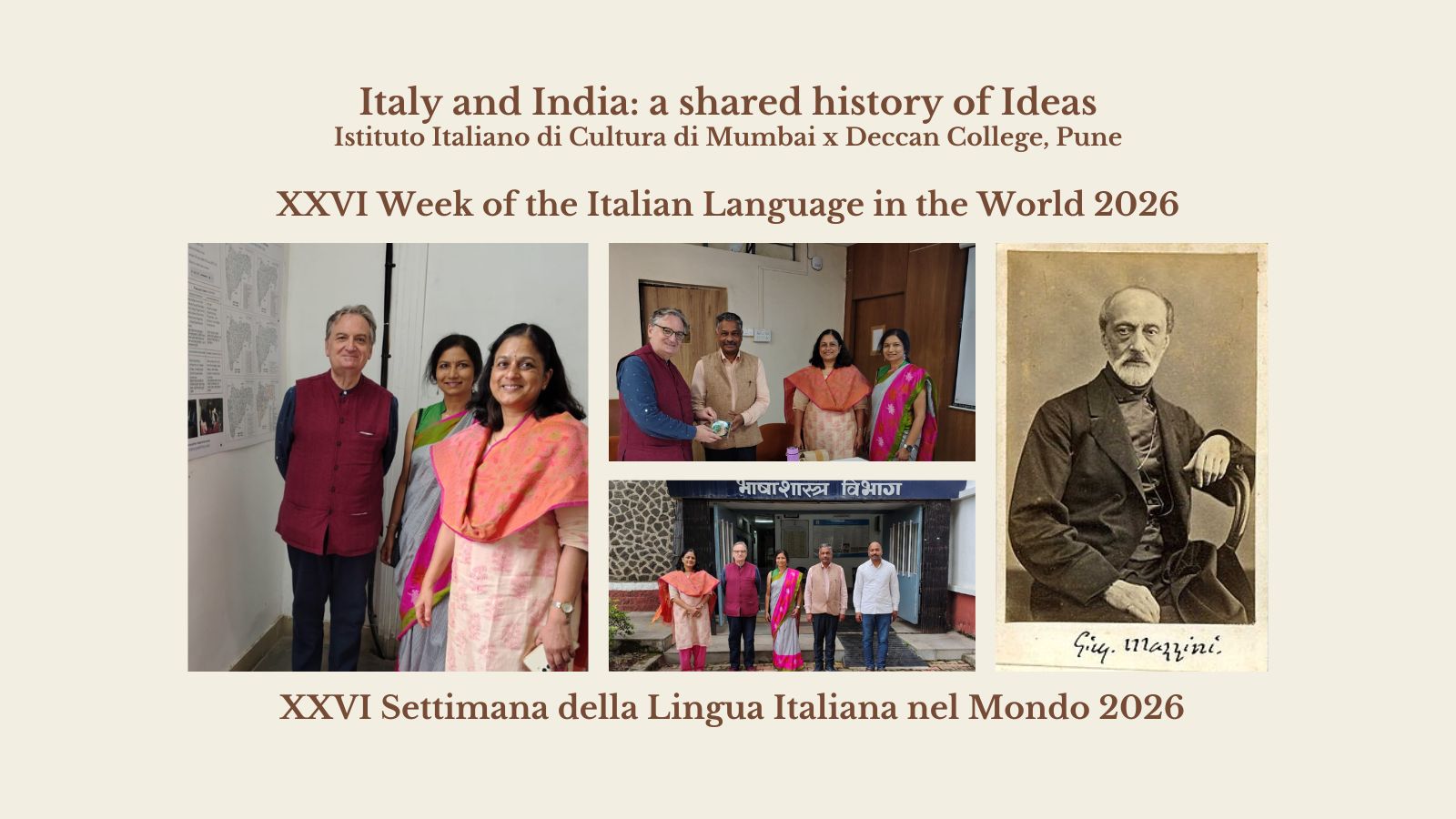
On 28 August, Deccan College, Pune, hosted Mr. Raffaello Barbieri, Director of the Italian Institute of Culture (IIC) Mumbai, for an institutional visit aimed at renewing the longstanding collaboration between the two institutions. The visit featured a presentation by Prof. Meghana Palshikar, Professor of Italian at Deccan College, on her doctoral research into the linguistic, cultural and historical significance of Giuseppe Mazzini’s autobiography.
Mazzini (1805–1872), an Italian revolutionary and political thinker, championed national independence, republicanism and popular education, founding the La Giovine Italia movement in 1831. Prof. Palshikar examined three Marathi translations of his autobiography published between 1899 and 1923, exploring their linguistic and cultural dimensions and their reception in colonial India.
The presentation also highlighted Mazzini’s support for India’s 1857 rebellion, which he described as a struggle against British rule, and his influence on Indian nationalist thinkers, including Bal Gangadhar Tilak and Mahatma Gandhi.
Following the presentation, Mr. Barbieri discussed connections between Giovine Italia and revolutionary organisations such as India’s Abhinav Bharat, alongside the contributions of Garibaldi, Cavour and Vittorio Emanuele II to Italian unification.
The occasion celebrated the enduring academic partnership between Deccan College and IIC Mumbai. Established with IIC Mumbai’s support, Deccan College’s Italian courses reflect this collaboration, as does Prof. Palshikar’s research topic, originally suggested by former IIC Mumbai Director Patrizia Gambarotta. The event underscored the intellectual ties between Italy and India through language, translation, history and political thought.
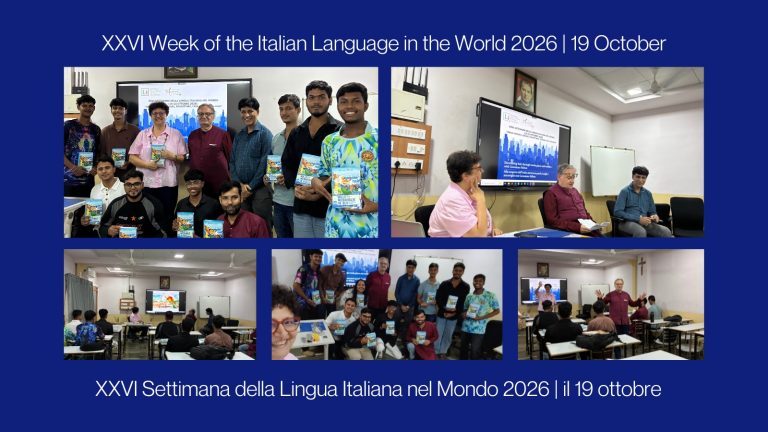
The visit was organised on the occasion of the 26th Week of the Italian Language in the World, dedicated this year to the theme “A Brilliant Language: Imagining, Designing and Creating in Italian”.